01
Diagnostic sprint
A focused engagement to identify the highest-friction workflow, map the commercial cost of the bottleneck, and define the strongest first move.

Future AI sells structure, speed, and control. The service stack exists to redesign the systems between inbound demand and reliable execution, then implement AI only where it actually improves the business. This page now carries both the offer and the way the work is sequenced.
The merged structure is designed to show the Future AI offer and the Future AI process as one connected delivery model instead of two separate stories.
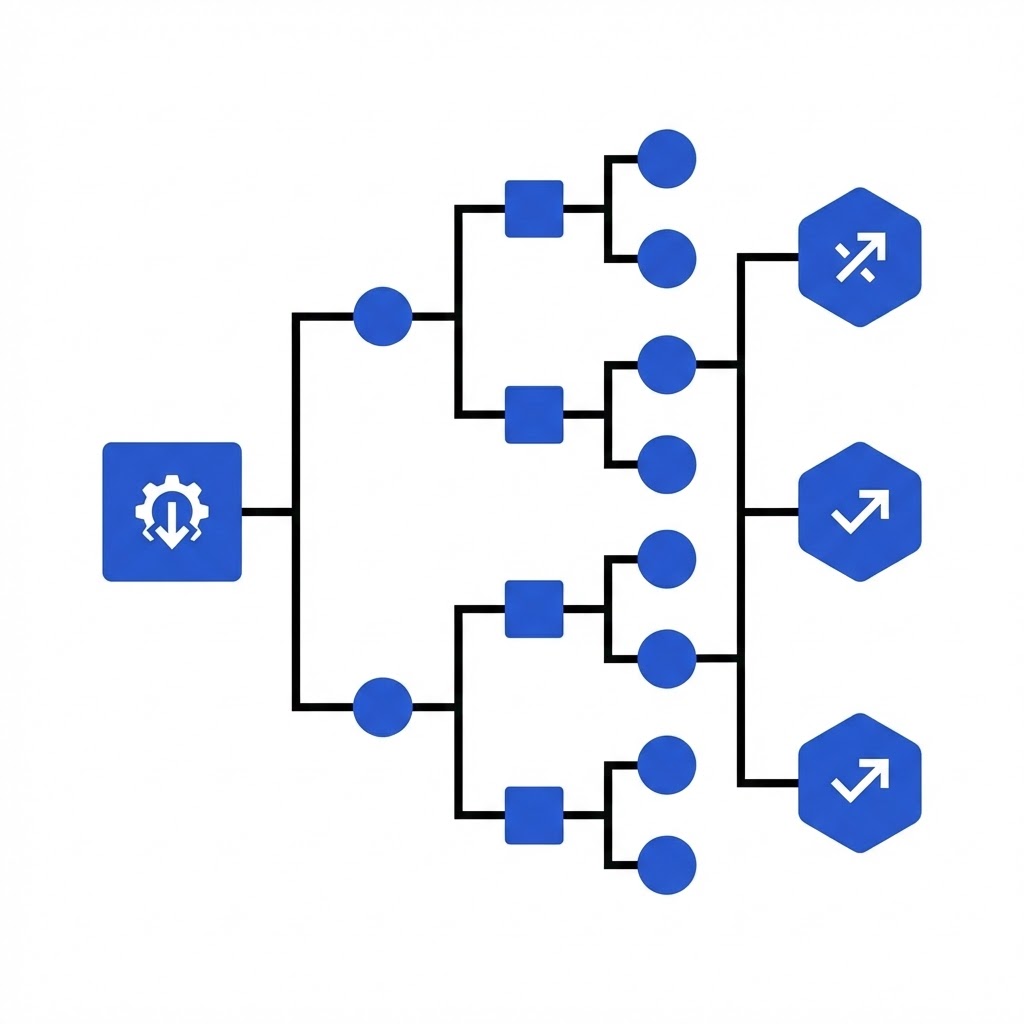
Discovery, design, deployment, and oversight are treated as one operating sequence, not disconnected deliverables.
The right first engagement is usually the narrowest high-value system, not the widest possible scope.
A focused engagement to identify the highest-friction workflow, map the commercial cost of the bottleneck, and define the strongest first move.
A rebuild of how requests enter the business, what gets captured early, how work is qualified, and where it gets routed next.
A systems engagement focused on the path from accepted work to delivered outcome, with cleaner handoffs and less manual overhead.
A deliberate implementation of AI inside the workflow where it improves speed or consistency without weakening oversight.
This is how Future AI moves from the first conversation to a working operating layer the team can actually trust and run.
We isolate the exact workflow or handoff where time, quality, or trust is currently leaking.
Inputs, decisions, approvals, automations, edge cases, and outputs are mapped into one coherent operating design.
The workflow is implemented with the right logic, the right guardrails, and the right amount of human intervention.
Once the first layer works, the next opportunity is scoped from a stronger base instead of piling more chaos on top.
Every engagement should leave the business with clearer logic, cleaner handling, and a system that is easier to trust.
The process is intentionally built to protect quality before it chases scale. That is what keeps the build commercially useful instead of operationally fragile.
AI only belongs where the system still remains legible. That means visible guardrails, explicit handoff rules, and a designed place for human judgment.
If the problem is still too vague, the workflow is ownerless, or the request is pure feature-chasing, the right answer may be to tighten operations first.